From Policy to Practice: Testronic Drives Sustainability in Poland
During this Earth Month, we speak to Natalia Sieniewicz, Administration and Environmental Specialist at Testronic in our Warsaw facility, who has been at the helm of the office’s sustainability programme.
She explains how the initiative came about, discusses the projects that have been put in place, and offers advice and inspiration to other games companies looking to address their workplace’s impact on the planet…
How did the sustainability projects first come about? And what initiatives have you put in place?
Our sustainability journey began in response to the 2020 amendments to Polish waste management legislation, which aligned with the EU’s Circular Economy Action Plan. These changes mandated companies to enhance waste reduction and recycling efforts. To comply, we trained a dedicated team in waste disposal management. This initiative revealed significant opportunities to improve our environmental practices across the organization.
Building upon our commitment to sustainability, we proudly participated in the Cleaner Production Academy (Akademia Czystszej Produkcji) organized by the Polish Cleaner Production Movement Association (Stowarzyszenie Polski Ruch Czystszej Produkcji).
As part of this programme, we developed and implemented an Environmental Policy tailored to our operations in Poland, setting clear environmental objectives. We also executed a pilot project that continues to yield environmental benefits, such as reduced waste generation and improved resource efficiency. Furthermore, we established a dedicated team to oversee and drive our environmental initiatives, ensuring ongoing commitment to sustainable practices.
As a result of our efforts, we were awarded the Cleaner Production Certificate (Świadectwo Czystszej Produkcji), which recognizes organizations that have completed the Academy, implemented pro-environmental actions aligned with Cleaner Production principles, and submitted an ecological report outlining achievements and future plans. This certificate is registered in the Cleaner Production Certificate Register and is subject to annual verification. Holding this certificate allows us to use the Polish Cleaner Production Program logo, promote our environmental achievements through the Association, and be listed in the publicly accessible register.
In collaboration with our office landlord, we’ve increased the number of bicycle parking spaces available to employees. Additionally, we’ve provided basic bicycle maintenance tools on-site to encourage cycling as a preferred mode of commuting. This initiative supports healthier lifestyles, reduces carbon emissions, and aligns with our goal of fostering a more sustainable workplace.
We’ve undertaken a comprehensive digital transformation of our internal processes to minimize paper usage. By transitioning to digital documentation and workflows, we’ve significantly reduced our reliance on paper, contributing to environmental conservation efforts. This shift not only lessens our ecological footprint but also enhances operational efficiency and data security.
As our sustainability journey progresses, we’ve observed a significant shift in mindset throughout our organization. We’re now proactively seeking ways to minimize our environmental impact, embracing a philosophy of ‘repair over replace’ and recognizing the potential to transform waste into valuable resources.
A notable example of this approach is the creation of a ‘Recycled Cable Tree’, an artistic installation crafted from discarded electrical cables. This project not only repurposes materials that would otherwise contribute to e-waste but also serves as a tangible representation of our commitment to sustainability and the circular economy. By reimagining waste materials, we highlight the importance of resource conservation and inspire innovative thinking within our team.
We partnered with WeForest, a non-profit organization dedicated to forest restoration and conservation, to sponsor tree planting initiatives. Through this collaboration, we contributed to reforestation efforts aimed at combating climate change, enhancing biodiversity, and supporting local communities.
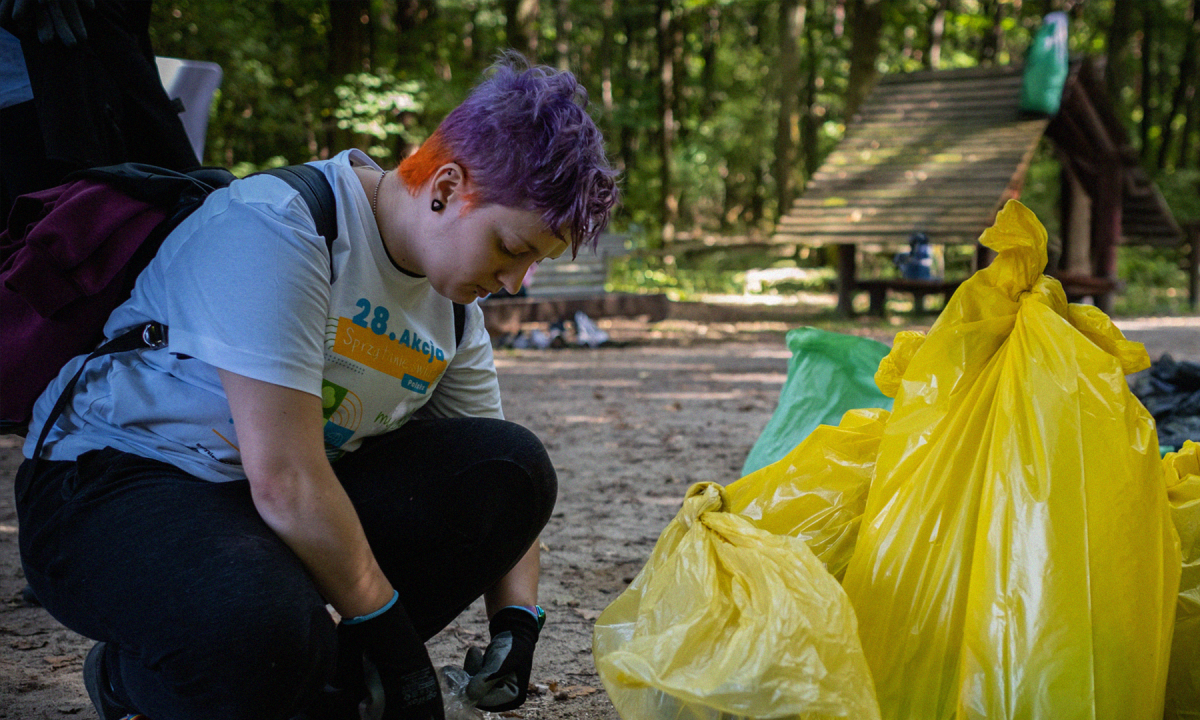
We actively participated in the ‘Clean Up the World’ campaign, known in Poland as ‘Sprzątanie Świata’, organized by the Nasza Ziemia Foundation. This annual event mobilizes volunteers to clean up litter and promote environmental awareness. Our involvement included organizing local clean-up activities, encouraging employee participation, and educating the community on waste management and recycling practices.
In our restrooms, we’ve installed touchless taps equipped with motion sensors. These automatically activate water flow when hands are detected and shut off promptly when no motion is sensed, significantly reducing water wastage. By maintaining a consistent water temperature, they also minimize energy consumption associated with heating water. Studies indicate that such installations can lead to substantial water and energy savings compared to traditional taps.
We’ve integrated motion-sensor technology into our lighting systems, particularly in areas with intermittent occupancy such as the corridors. These sensors ensure that lights are only active when spaces are occupied, thereby reducing unnecessary energy usage. This approach not only conserves energy but also extends the lifespan of lighting fixtures.
Our air conditioning systems are progressively being upgraded to utilize R-32 refrigerant, known for its lower Global Warming Potential (GWP) compared to traditional refrigerants like R-22. R-32 has a GWP of approximately 675, significantly less than R-22’s GWP of 1,810, making it a more environmentally friendly option.
Through these initiatives, we continue to leverage technological advancements to create a more sustainable and energy-efficient operational environment.
What have been the biggest successes you’ve had with the project?
One of our most significant achievements has been the successful implementation of a comprehensive sustainability system that operates effectively across our organization. This system has not only streamlined our environmental initiatives but also fostered a culture of sustainability among our team members.
A highlight of our efforts was receiving a nomination for the Sustainability Champion category at the 2024 Ukie Video Game Awards. This recognition by industry peers was both gratifying and motivating, affirming that our dedication to environmental responsibility is making a meaningful impact. While we did not secure the award, the nomination itself was a testament to our team’s hard work and commitment.
What response have you had from the rest of the Testronic team in Warsaw?
Our team in Warsaw has been highly engaged and proactive in our sustainability initiatives. They actively contribute both positive and constructive feedback, demonstrating a strong commitment to environmental responsibility. We maintain an open-door policy for their ideas, understanding that their insights are invaluable in refining our strategies. I contribute to cultivating a culture of sustainability within the organization, ensuring our initiatives align with both environmental objectives and business goals, thereby fostering a more environmentally responsible and cohesive workplace.
What’s next in terms of projects and initiatives?
Environmental management has become an integral mindset embedded in nearly every aspect of our office operations. Looking ahead, we’re focusing on several key areas to further our sustainability efforts like enhancing energy efficiency, promoting sustainable transportation and increasing employee engagement.
And finally, what advice would you give to any other games company looking to make a difference when it comes to climate change and sustainability?
Embarking on a sustainability programme doesn’t require massive overhauls; starting with small, meaningful steps can lead to significant impacts. Here are some practical recommendations:
- Begin with Environmental Compliance: Ensure adherence to local and international environmental regulations. This foundational step not only mitigates risks but also sets the stage for more ambitious sustainability goals.
- Engage Employees: Identify and empower team members passionate about sustainability. Their enthusiasm and creativity can drive initiatives and foster a culture of environmental responsibility.
- Promote Sustainable Commuting: Encourage the use of public transportation, cycling, or carpooling. Providing facilities like bike racks or incentives for eco-friendly commuting can make a difference.
- Reduce Paper Usage: Transition to digital documentation and workflows to minimize paper consumption, enhancing both environmental impact and operational efficiency.
- Implement Recycling Programs: Set up clear and accessible recycling stations within the office. Educate employees on proper waste segregation to maximize effectiveness.
- Source Locally: Procure supplies and services from local vendors to reduce transportation emissions and support the local economy.
- Conduct Awareness Campaigns: Organize workshops or informational sessions to educate staff about sustainability practices and the company’s environmental goals.
- Monitor and Report Progress: Regularly assess your environmental impact and share progress with the team. Transparency creates trust and continuous improvement.
